

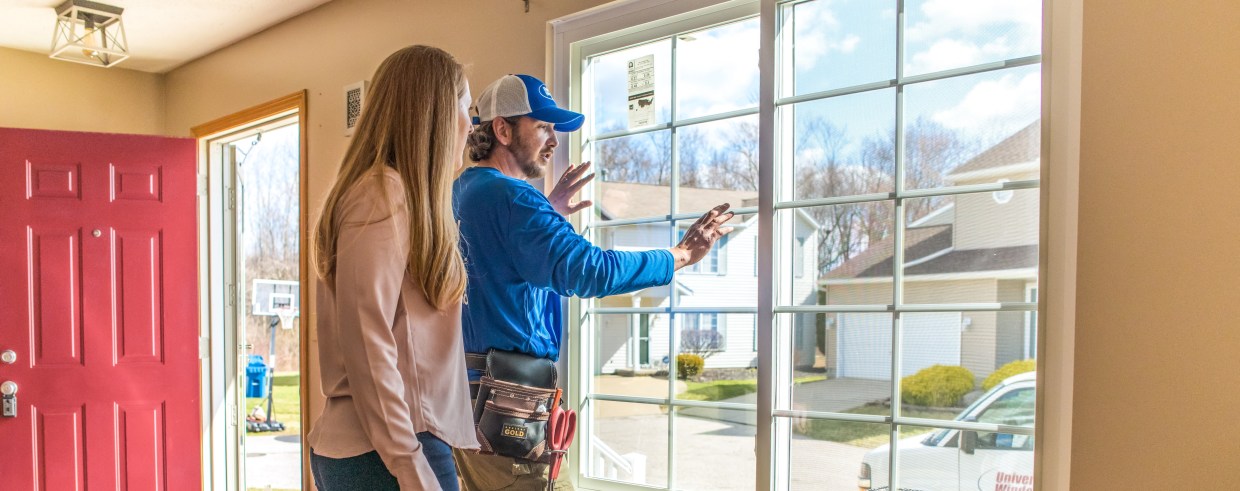
Replacing your home’s windows can improve comfort, energy efficiency, and curb appeal. One thing to consider when choosing new windows is how they’ll be installed.
There are two main window installation methods for replacement projects: insert and full-frame installation. Understanding how replacement windows are installed can help you compare these options, including what’s removed, how much work is involved, and which method best suits your home’s condition.
Understanding the fundamentals of these methods before requesting an estimate can help you compare quotes and make an informed decision.
Why the Installation Method Matters
Proper installation helps prevent drafts and moisture intrusion while supporting energy efficiency and long-term performance. The installation method also determines how much of the existing window assembly is removed.
Insert installation preserves the original frame when it’s in good enough condition. Full-frame installation, however, removes the existing window and frame, allowing the installer to inspect and prepare the entire opening.
Neither method is automatically better than the other. The right choice depends on the condition of your current windows, the home’s construction, and your renovation goals.
The Two Main Types of Replacement Window Installation
Insert and full-frame installation differ in removal requirements, labor, cost, and the situations they’re best suited for. Here’s what to consider:
| Consideration | Insert installation | Full-frame installation |
| What’s removed? | Existing sashes and necessary components; original frame remains | Existing window and frame |
| Timeline | Generally, less time-intensive | Usually requires more time |
| Cost | Typically, lower when frames are sound | Typically, higher due to additional labor and materials |
| Best for | Sound frames and unchanged openings | Damaged frames, repairs, or changes to the opening |
*Actual costs and timelines depend on the number of windows, accessibility, materials, and repairs required. A professional assessment can help determine the right approach.
What Is Insert (Pocket) Window Replacement?
Insert replacement windows fit inside an existing frame that’s structurally sound. Also known as pocket window installation or retrofit windows, this method replaces the window unit without removing the entire surrounding frame. Because the original frame remains, insert installation can reduce disruption to interior trim and exterior finishes.
When Insert Replacement Makes Sense
Insert replacement windows may be suitable when:
- Existing frames are structurally sound, without significant rot or moisture damage.
- You want to modernize outdated or drafty windows without changing the opening.
- Your brick or stucco exterior makes preserving surrounding finishes desirable.
- You want a less labor-intensive installation with less disruption to existing trim.
An older home isn’t automatically a candidate for full-frame replacement. The condition of the existing frame matters more than the home’s age.
What Happens During an Insert Installation
The process typically involves four steps:
- Preparation: Installers protect nearby surfaces and furnishings.
- Removal and inspection: Existing sashes and necessary components are removed, and the retained frame is inspected.
- Installation: The replacement window is fitted, aligned, secured, and sealed according to installation requirements.
- Finishing: Installers complete the necessary finishing work and check that the window operates properly.
If the inspection reveals significant deterioration, the original frame may not be suitable for reuse.
Pros and Cons of Insert Replacement Windows
Insert installation can be an efficient way to replace windows when the existing frame is in good condition.
Pros:
- Typically lower labor costs than full-frame replacement.
- Less disruption to surrounding trim and exterior finishes.
- Often a faster installation process.
- A practical option when the existing opening will remain unchanged.
Cons:
- Hidden damage in the existing frame may go unnoticed.
- Older frame designs may limit energy efficiency.
- Changes to window dimensions may be limited.
- The finished window may have slightly less visible glass area, depending on the frame and design.
The installer should confirm that the existing frame is sound before recommending this method.
What Is Full-Frame Window Replacement?
Full-frame window replacement involves removing the existing window and frame to expose the rough opening. The installer can then inspect the opening, address necessary repairs, and fit the new window assembly.
This method generally requires more labor and materials than insert installation, but it can provide a more comprehensive solution when the existing frame is damaged or unsuitable.
When Full-Frame Replacement Makes Sense
Full-frame replacement may be recommended when:
- Existing frames or sills have significant rot or moisture damage.
- The surrounding opening needs inspection or repair.
- You want to change the window size, shape, or configuration.
- The original frame cannot support a secure, properly sealed installation.
- A larger renovation involves the surrounding window assembly.
For example, replacing a window with a rotting wooden sill may require removing the entire frame to address the damage. Similarly, enlarging a window opening can involve additional construction beyond simply replacing the window unit.
What Happens During a Full-Frame Installation
Full-frame installation involves several steps:
- Preparation and removal: Installers protect the work area and remove the existing window, frame, and necessary trim.
- Inspection and repairs: The exposed rough opening is checked for damage, with necessary repairs completed.
- Weatherproofing: Appropriate flashing, insulation, and moisture-management measures are installed.
- Installation and finishing: The new window is aligned, secured, and sealed, and the necessary interior and exterior finishes are completed.
- Final inspection: Installers check the window’s operation and finish and clean the work area.
The amount of repair and finishing work depends on the home’s condition.
Pros and Cons of Full-Frame Replacement
Full-frame installation offers greater flexibility when the existing window assembly needs more extensive attention.
Pros:
- Removes damaged or deteriorated frames.
- Allows inspection and repair of the rough opening.
- Can accommodate changes to window size or configuration when the project permits.
- Provides an opportunity to improve insulation and weather protection around the opening.
Cons:
- Generally, costs more than insert installation.
- Usually takes longer.
- May require more extensive interior and exterior finishing.
Full-frame replacement isn’t necessary simply because a home is older. The recommendation should reflect the frame’s condition and the homeowner’s renovation goals.
Insert vs. Full-Frame Window Replacement: Cost and Timeline
Insert installation generally costs less because the existing frame remains in place, reducing removal, labor, and finishing requirements. Full-frame replacement typically costs more because it involves removing the entire assembly and preparing the opening.
There is no single price difference that applies to every home. Costs depend on the number and size of windows, accessibility, frame condition, materials, labor, and finishing work.
Insert projects may also be completed more quickly when the frames are sound and no complications arise. Full-frame projects typically require more time for removal, inspection, repairs, weatherproofing, and finishing.
When comparing estimates, ask whether they include removal and disposal, repairs, insulation and sealing, trim, cleanup, and warranty coverage. If you’re working within a budget, review available financing options and ask which method meets your home’s needs without unnecessary work.
New Construction vs. Replacement Windows
Understanding new construction vs. replacement windows can help clarify your options.
New construction windows are generally installed during home construction or renovations that expose the wall opening. They commonly feature a nailing flange that helps secure the window and integrate it with the home’s weatherproofing system.
Replacement windows are designed for existing openings. Depending on the home’s condition, they may be installed using either an insert or full-frame method.
Although full-frame replacement exposes the rough opening, it isn’t necessarily the same as installing a window in a newly built home. For an existing property, the key question is whether the original frame can be retained or needs to be removed.
Replacement Window Styles Available with Either Method
Installation method and window style are separate decisions. The method determines how the window is installed, while the style affects its appearance, operation, and suitability for a room.
Depending on the opening and project requirements, replacement window styles include:
- Double-hung windows: A traditional style with two movable sashes.
- Casement windows: Hinged windows that open outward using a crank.
- Sliding windows: Windows that slide horizontally along a track.
- Picture windows: Fixed windows that frame views and bring in natural light.
- Bay and bow windows: Configurations that extend outward from the home’s exterior.
- Custom windows: Options tailored to specific dimensions or architectural requirements.
The right combination depends on the existing opening, desired operation, and the home’s design. Some style changes may work with insert installation, while substantial changes to window dimensions may require full-framework. You can also consider energy-efficient windows designed to help reduce unwanted heat transfer when properly selected and installed.
Explore Your Window Options
From double-hung to bay and bow, browse replacement windows from Universal Windows Direct. Find styles and customization options to suit your home, installed by certified, insured crews.
Choosing an Installer: Warranty, Insurance, and Experience
The installation method matters, but the quality of the work matters just as much. Incorrect fitting or sealing can undermine window performance regardless of the product selected.
Before choosing a contractor, ask about:
- Experience: Can the installer explain why a particular method suits your home?
- Insurance: Can the company confirm appropriate coverage?
- Warranty: What is covered, and are there exclusions or maintenance requirements?
- Scope of work: Does the estimate specify removal, repairs, sealing, finishing, and cleanup?
- Installation process: Who will complete the work, and what should you expect on installation day?
As part of the Great Day Improvements family of home improvement brands, Universal Windows Direct has an established company behind its window replacement services. Review warranty terms carefully rather than assuming all warranties offer the same protection. Universal Windows Direct offers a True Lifetime Warranty, and you can review the full coverage and terms before you sign.
Professional window installation should account for fit, sealing, moisture management, and proper operation. An experienced installer should explain the recommendation and why any additional work is necessary.
“The right window installation method starts with understanding the condition of the existing frame. If it’s structurally sound, an insert replacement may be a good option. If there’s damage or the opening needs to change, full-frame replacement may be the better solution. The goal is to recommend what’s right for the home, not simply the more extensive installation.” – Josh Ventry
Get the Right Installation for Your Home
Choosing between insert and full-frame replacement comes down to the condition of your existing frames and your renovation goals. Insert installation can be an efficient option when the frame is sound, and the opening will remain unchanged. Full-frame replacement is often more appropriate when damage needs attention, or the opening must be modified.
A professional inspection can help you understand the available options, compare project costs, and determine what your home actually needs.
Not Sure Which Method Your Home Needs?
A Universal Windows Direct expert can inspect your current frames and sills and recommend an insert or full-frame replacement based on your home’s needs. Schedule a free in-home estimate to discuss your options.
Let’s Clear Up a Few Common Window Replacement Questions
What are the two main types of replacement window installation?
The two main types are insert and full-frame installation. Insert installation fits a new window inside a suitable existing frame, while full-frame installation removes the existing window and frame to prepare the entire opening.
Is insert window replacement better than full-frame replacement?
Neither method is always better. Insert installation may suit sound frames and unchanged openings. Full-frame replacement is generally more appropriate when the frame is damaged, or the opening needs repairs or modifications.
Is full-frame window replacement more expensive?
Full-frame replacement generally costs more because it involves additional removal, labor, and materials. The final price depends on the home’s condition, window dimensions, accessibility, and finishing requirements.
Can you replace windows in a brick or stucco home without removing the frame?
Yes, insert installation may be suitable if the existing frame is structurally sound and properly sealed. Retaining it can help limit disruption to surrounding exterior finishes, but an installer should assess the opening first.
How long does replacement window installation take?
The timeline depends on the installation method, number of windows, and condition of the openings. Some insert installations can be completed in a day, while full-frame projects may take longer because of additional removal, repairs, and finishing.