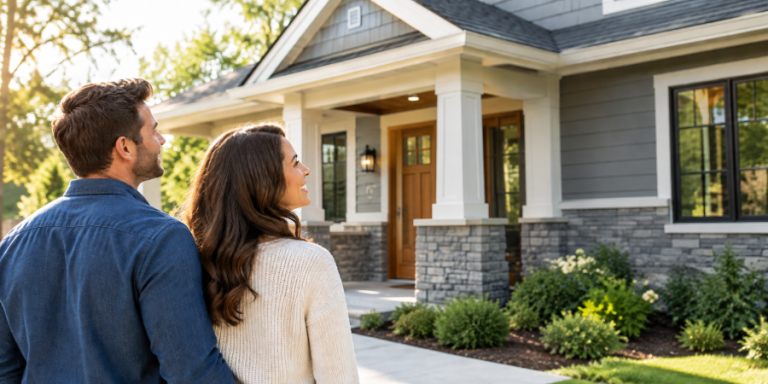

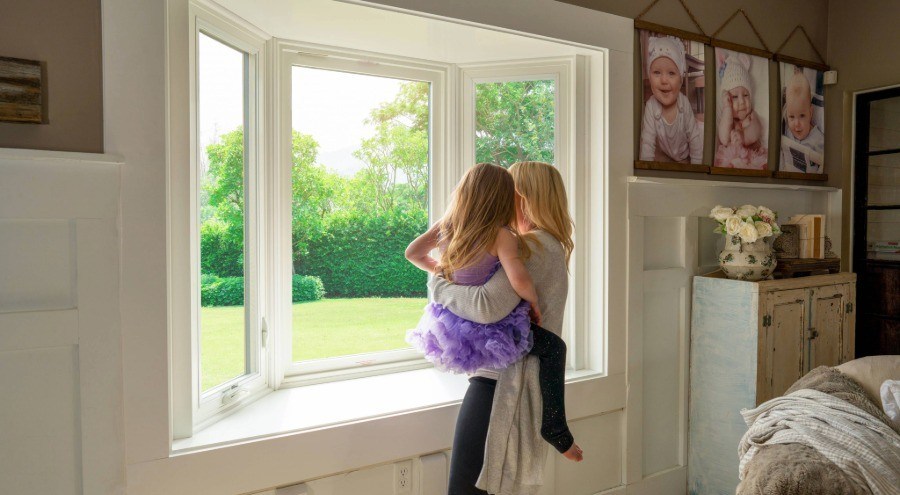
Bay and bow windows both add natural light and architectural character, but their shapes differ. Bay windows typically have three angled panels, while bow windows use four to six panels to form a curve. Both project beyond the exterior wall, creating wider views and a focal point.
Bay vs. Bow Windows at a Glance
| Feature | Bay Windows | Bow Windows |
| Shape | Angular projection | Gentle curve |
| Panels | Usually three | Usually four to six |
| Views | Wide central view with angled sides | Broad, panoramic view |
| Interior space | Often suits a window seat | Seating depends on width and design |
| Cost | Generally less expensive | Generally more expensive |
The right choice depends on your home’s style, space, budget, and existing opening.
What Is a Bay Window?
A bay window projects outward from the exterior wall, usually with a large center window and two angled side windows. It brings in light from multiple directions and can create space for a reading nook, plants, or a bay window seat. The center panel may be a fixed picture window, while the sides can open for ventilation.
Common Types of Bay Windows
Types include canted bay windows, with angled sides; box bay windows, with a squared-off projection; and oriel windows, which project from an upper floor and may have brackets. Choose a configuration that suits your home’s architecture and available space.
What Is a Bow Window?
A bow window combines four to six panels in a curved arrangement that projects beyond the wall. Its rounded profile creates a broad view and a softer architectural feature. Bow windows suit many home styles and can combine fixed and operable panels.
4 Key Differences Between Bay and Bow Windows
1. Shape and Number of Panels
Bay windows usually have three panels and defined angles. Bow windows use more panels to create a gradual curve, giving bay windows a geometric profile and bow windows a rounded appearance.
2. Natural Light and Views
Both styles bring in natural light. Bay windows emphasize the center view, while bow windows offer a wider sweep. For uninterrupted glass, consider a fixed picture window.
3. Interior Space and Window Seats
Both designs can accommodate displays or seating. Bay windows often suit a window seat, while bow windows may offer seating depending on their dimensions. Check floor space and furniture clearance before choosing.
4. Ventilation and Window Styles Used
Ventilation depends on which panels open. Configurations may include casement windows or double-hung windows alongside fixed panels.
Which Is Cheaper, a Bay or a Bow Window?
Bay windows are generally more affordable because their simpler design often uses fewer panels. Bow windows usually cost more than a comparable bay window because they use more panels. Actual prices vary by size, materials, customization, and installation requirements.
What Affects Bay and Bow Window Costs?
Price depends on dimensions, materials, glass, labor, and structural changes. Both styles may need exterior finishing or a roof or soffit tie-in, and bow windows may require extra support. Proper weatherproofing helps prevent drafts and moisture.
Energy-efficient windows can help reduce unwanted heat transfer. Compare quotes for your specific opening, and ask Universal Windows Direct about flexible financing options, subject to approval and availability.
Pros and Cons of Bay and Bow Windows
Bay Window Pros and Cons
Pros include natural light, a defined architectural feature, added interior space, and a useful window-seat area. Cons include angular styling that may not suit every home, the need for exterior clearance, and possible structural or roof modifications.
Bow Window Pros and Cons
Pros include a rounded profile, broad views, natural light, and a softer architectural effect. Cons include potentially higher costs, more panels to customize, and the possible need for added structural support or exterior clearance.
Which Window Fits Your Home’s Style?
Bay windows suit homeowners who prefer defined lines and a prominent focal point. They can work with traditional, transitional, and contemporary homes. Bow windows offer a softer curve and wide visual sweep, often complementing Victorian and traditional architecture.
Are bay windows still in style? Yes. Both styles remain appealing ways to add light and architectural interest. Choose a design that complements your home’s proportions and works with your everyday needs.
Picture It in Your Home
Browse real bay and bow window projects from Universal Windows Direct to see how each style changes a room, inside and out.
Can You Replace a Bow Window With a Bay Window?
Yes, in many homes, but it may not be a direct swap. The different shapes can require changes to the opening, framing, structural support, trim, siding, or roof and soffit connections. An installer can assess the existing setup and explain the work involved.
Why Professional Installation Matters for Bay and Bow Windows
Because both styles project beyond the wall, proper support, insulation, and weatherproofing are essential. Poor installation can contribute to drafts, moisture intrusion, and operating problems. Professional window installation helps ensure the opening is measured correctly and the unit is supported and sealed.
Universal Windows Direct offers custom bay and bow windows with UniShield® energy-efficient options. Availability varies by market.
“Bay and bow windows can transform a room, but the right choice depends on more than appearance. We look at the existing opening, the home’s structure, and the homeowner’s goals to recommend an option that fits the space and performs as it should.” – Josh Ventry
Find the Right Bay or Bow Window for Your Home
Bay windows offer angular styling at a generally lower cost; bow windows create a rounded profile and broad views. Both can add light and character.
Get Expert Advice on the Right Fit
Not sure which style suits your space? A Universal Windows Direct expert can measure your opening, discuss your options, and provide a quote. No pressure, no obligation.
Bay vs. Bow Windows: Your Top Questions Answered
A bay window typically has three angled panels, while a bow window usually has four to six panels arranged in a curve.
Bay windows are generally less expensive. Bow windows usually cost more because they use more panels, but project costs vary.
They can improve curb appeal, light, and usable space, though resale impact depends on the home and market.
Yes. Bay windows continue to appeal to homeowners looking for natural light, architectural dimension, and space for a seat or display.
Often, yes. The opening, framing, support, and exterior finishes may need changes, so have the installation assessed before deciding.