
When we think of seasons that cause weather damage to homes, we tend to think of the colder months, when freeze-thaw cycles, winter storms, and heavy snowfall can take a toll. But the summer months can cause just as much damage. The good news is that fall is the perfect time to take a look at your roof and exterior and see how they held up over the summer. Inspecting your home for storm damage after summer weather can help you catch small problems before they turn into expensive ones. Here’s what you’ll need to look for when inspecting your home.
Start With a Safe, Ground-Level Look
Starting with an inspection from the ground keeps you safe and allows you to spot major warning signs without risking a fall. You can scan the whole roof quickly (you could even use a pair of binoculars if you have them) before deciding on any necessary next steps. From the ground, look for curled, missing, or broken shingles, check gutters for debris buildup or sagging, and look for cracks or gaps in your siding. Your yard itself can also hold clues. Look for shingles that may have fallen onto the ground for signs of roof damage.
Sun Damage: Warping and Curling
The sun emits ultraviolet (UV) radiation and heat that over time and over the summer months, cause damage to your roof shingles, the most exposed part of a home.
Curling or Buckling Shingles
The asphalt in shingles contains specific oils that keep them flexible and water resistant. UV rays break down the molecular structure of the asphalt, driving those oils out and making the asphalt more brittle.
With enough UV exposure over time, the top layer of shingles dries out faster than the base layer beneath them, causing the corners or sides to curl. The shingle edges will likely look dry or cracked as the UV dries up those oils.
Intense direct sunlight also heats up roof decking, causing the panels underneath to push against each other and bow upward. Buckling shingles look like raised bumps or sometimes wavy lines across the surface of your roof.
Faded, Warped, or Cracked Siding
UV rays and heat can damage the siding of your home. As with shingles, UV rays break down surface pigments of siding panels, causing fading and discoloration, especially on west-facing walls. High heat expands materials often used in siding, like vinyl. If there isn’t any room for expansion, the panels can warp or even melt. The constant cycle of heating and cooling throughout the summer causes materials to become brittle. Look for cracks near seams or corners of siding, as well as curled edges.
Water Damage: Leaks, Rot, and Drainage
Water damage can weaken a home’s physical structure and lead to mold growth. Summer often brings heavy storms, overworked appliances like air conditioners, and high humidity.
Sagging or Clogged Gutters
Gutters protect your home from water damage. When gutters are not maintained over the summer, or take a beating from severe storms, they can fill up with debris and trap water against a home’s exterior instead of directing it away. The standing water adds weight, making gutters sag and pull away from the roofline.
Look for places in the gutter that are sagging or where water is spilling over the edge. Water can rot the wooden boards that help hold up the gutter and roof, stain siding, or flood your basement.
Rotting or Water-Stained Window Frames
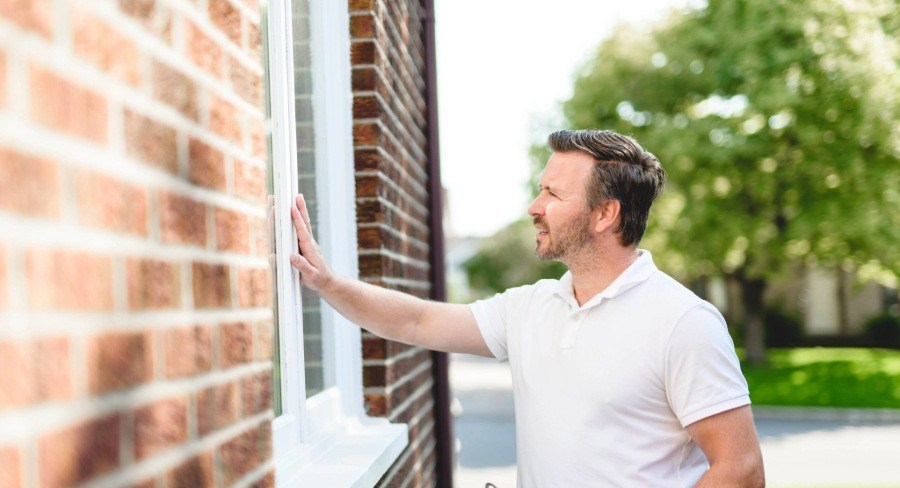
Heavy rainfall and high humidity can trap moisture and stain or rot window frames. If you think you might have rotted window frames, try pressing your finger or a screwdriver into the sill. If it feels soft, or sinks in, the wood is likely rotting. Peeling or bubbling paint on the sill is another sign that moisture has been trapped and is breaking the paint’s bonds.
If the window frame has rot, it might be time to repair or replace your window.
Interior Signs of Roof Damage: Stains and Musty Odors
Rain damage sometimes shows up inside the home. Brown or yellow stains in the shape of rings or spots are a sign that water has leaked or is actively leaking from the roof. An earthy or musty smell could mean you have hidden moisture behind walls or under floors.
A Universal Windows Direct expert can take a closer look at your roof, siding, gutters, and windows and tell you what needs attention now. Book a free, no-obligation assessment.
Impact Damage from Hail: Cracks, Dents, and Breaks
In addition to extreme heat, severe storms can cause impact damage to your home during the summer.
Cracked or Missing Shingles
Cracked or missing shingles are a common sign of roof storm damage after summer. Shingles that have become brittle under UV exposure and extreme heat can more easily lift off or tear away in high winds.
Chipped or Dented Siding
During a summer hailstorm, hail can leave small dents or chips, especially on brittle siding panels. High winds can throw fallen tree branches, twigs, and stone against the house, causing dents and scrapes. Look around for large dents, scrapes, or chips in your siding.
Cracked or Broken Window Glass
A cracked or broken window is usually easier to spot. Glass broken by storm debris usually shows a direct point of contact. Cracks from impact typically spread outward like a spiderweb across the window. This often means you’ll need replacement windows.
Repair or Replace? What the Damage Might Be Telling You
If you inspect your home and see any of these signs of sun, water, or impact damage, it might mean that certain parts of the home need to be repaired or replaced. If the damage is small and in isolated areas, leaks are minor and caught before the wood starts to rot, and roof, siding, and windows are within their lifespan, a repair may be all you need. New roofing, siding, gutters, or windows may be needed if the damage is more severe or if they are past their expected lifespan.
Get an Expert Storm Damage Assessment of Your Home’s Exterior
Get ahead of the next storm. If summer weather took a toll on your home, explore durable siding, roofing, gutter, and window solutions from Universal Windows Direct, built and installed to stand up to whatever the seasons bring.
Frequently Asked Questions
Start with a safe, ground-level inspection. Look for missing, cracked, or curling shingles, check gutters for shingle granules, and watch for sagging gutters. Using binoculars can also help you spot issues without risking a fall.
Sun damage often shows up as curled, buckled, or cracked shingles. Prolonged UV exposure can make shingles brittle, causing edges to curl and surfaces to dry out, fade, and crack.
Yes. High temperatures and UV rays can fade, warp, crack, or discolor siding. Vinyl siding may expand during extreme heat, causing visible warping.
Brown or yellow stains, water spots, and peeling paint on ceilings or upper walls can indicate a leak or excess moisture. Musty odors can also be a sign of moisture. These signs may point to roof or window problems that need attention.
Check for soft or rotting wood, peeling paint, or moisture around the frame. If your finger or a screwdriver easily presses into the wood, the frame is likely rotting.
Summer storms can cause cracked or missing shingles, chipped or dented siding, and broken or cracked windows. Hail, strong winds, and flying debris are all common causes of this type of damage.
This depends on the severity of the damage and the age of materials. Minor, isolated damage may only require repairs, while widespread damage or components nearing the end of their lifespan may be candidates for replacement.